
Stop Masking the Pain: 7 Natural Ways to Finally Get Lasting Chronic Pain Relief
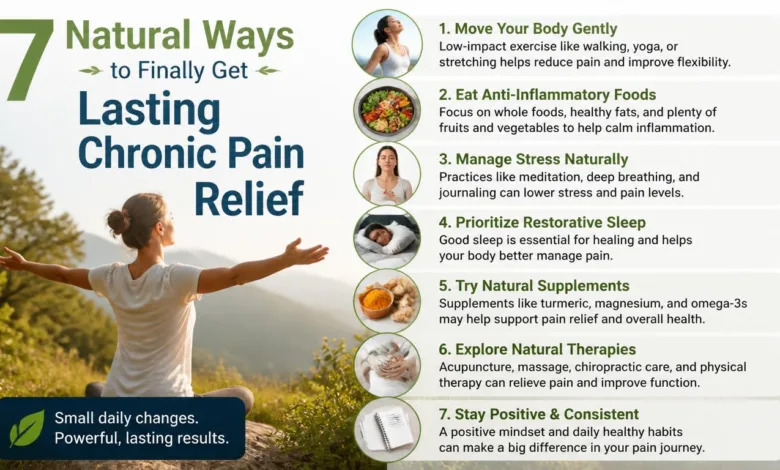
What if the biggest problem with how we treat chronic pain isn’t the treatments themselves — it’s the mindset behind them? Most conventional approaches focus on suppressing the sensation of pain, not resolving the underlying drivers. For the estimated 1.5 billion people worldwide living with chronic pain, this approach often means a lifetime of escalating medications with diminishing returns. But a growing movement in integrative medicine is flipping the script — asking not “how do we block this pain signal?” but rather “why is the body sending it in the first place?” This guide explores seven distinct natural strategies that go beyond symptom management to address the real roots of persistent pain — from your nervous system and sleep architecture to acupuncture needles and the surprising role of light therapy.
1. Acupuncture: Ancient Needles, Modern Evidence
Acupuncture has been practiced for over 3,000 years, yet it’s only in the last two decades that Western medicine has begun to take it seriously — and the research is turning out to be genuinely impressive. A landmark meta-analysis published in the Journal of Pain pooled data from nearly 18,000 patients and concluded that acupuncture produced statistically significant and clinically meaningful reductions in chronic musculoskeletal pain, headache, and osteoarthritis compared to both placebo and no treatment. What’s happening under the skin? Needle insertion appears to stimulate A-delta and C nerve fibers, triggering the release of endorphins, serotonin, and adenosine — neurotransmitters that naturally modulate pain pathways.
Modern researchers have also identified that acupuncture influences the default mode network of the brain — regions involved in pain rumination and catastrophizing. For people with central sensitization (where the nervous system is stuck in a heightened pain state), this neurological re-calibration can be particularly valuable. A typical course runs 6–12 weekly sessions, with many patients reporting cumulative improvements that outlast the treatment period. It’s also worth exploring dry needling — a related technique performed by physiotherapists that targets myofascial trigger points, with excellent results for muscle-based chronic pain.
💡 Practical tip: Look for a licensed acupuncturist with experience in your specific condition (e.g., neuropathy vs. musculoskeletal pain), as point selection and technique vary considerably between conditions.
2. Heat, Cold, and the Forgotten Art of Thermal Therapy
Before the pharmaceutical age, heat and cold were the primary tools humanity had for managing pain — and it turns out we may have underestimated them. Thermotherapy (applying heat) works by increasing blood flow to painful areas, relaxing muscle spasms, reducing joint stiffness, and activating heat receptors that compete with pain signals. For chronic conditions like lower back pain, fibromyalgia, and arthritis, continuous low-level heat wraps worn throughout the day have been shown in clinical trials to outperform oral ibuprofen for pain relief and functional improvement. That’s a remarkable finding that most people never hear about.
Cryotherapy (cold therapy), meanwhile, reduces nerve conduction velocity — essentially slowing down pain signals — while decreasing inflammatory cytokines in the affected area. Localized cold packs, cold water immersion, and whole-body cryotherapy chambers (now increasingly available at sports clinics) all work through this mechanism. The most sophisticated approach combines both: contrast therapy, alternating between hot and cold exposure in cycles. Used routinely by elite athletes, contrast therapy dramatically accelerates tissue recovery and reduces chronic inflammatory load. For someone dealing with persistent joint or muscle pain, investing in a quality heating pad and a cold compression wrap is genuinely one of the highest-ROI purchases you can make.
🛒 Explore on Amazon:
• Heating Pads for Chronic Back and Muscle Pain
• Cold Compression Wraps for Joint Inflammation
• Infrared Heating Pads – Deep Tissue Pain Relief
3. Sleep Optimization: The Pain-Recovery Cycle Nobody Talks About
Here’s a cruel paradox at the heart of chronic pain: pain disrupts sleep, and poor sleep makes pain worse. This bidirectional relationship creates one of the most vicious cycles in all of medicine. Research from the University of California, Berkeley demonstrated that just one night of poor sleep increases pain sensitivity by up to 15–30% the following day — through measurable changes in brain activity in regions that amplify sensory pain signals. For chronic pain sufferers who routinely sleep poorly, this compounds relentlessly, creating a baseline of pain that feels impossible to escape.
Treating sleep as a core component of pain management — not an afterthought — can be genuinely transformative. Sleep hygiene interventions that have demonstrated specific pain-reducing benefits include:
- Consistent sleep-wake timing — anchoring your circadian rhythm reduces nighttime pain flares and improves sleep architecture
- Cooling the bedroom to 65–68°F (18–20°C) — promotes deeper slow-wave sleep, during which growth hormone (a tissue repair signal) is released
- Magnesium glycinate before bed — supports GABA pathways that quiet an overactive nervous system
- Blue light reduction 2 hours before sleep — preserves melatonin, which has independent anti-inflammatory properties
- Cognitive Behavioral Therapy for Insomnia (CBT-I) — now recognized as the gold-standard first-line treatment for chronic insomnia, with downstream benefits for pain
For people with fibromyalgia specifically, improving sleep quality often produces more dramatic symptom reduction than any single medication. Sleep is not passive recovery — it is active biological repair. Treating it with that level of seriousness can fundamentally change your pain trajectory.
🛒 Explore on Amazon:
• Magnesium Glycinate for Sleep and Pain Relief
• Blue Light Blocking Glasses for Better Sleep
4. Essential Oils and Aromatherapy: More Than Just a Pleasant Scent
Aromatherapy occupies a complicated space in the natural pain relief conversation — often dismissed as pseudoscience by skeptics, yet backed by a surprisingly substantial body of clinical evidence. The key is distinguishing between topical application (where essential oils interact directly with skin receptors and local tissue) and inhalation (where volatile compounds influence the limbic system and autonomic nervous system via olfactory pathways). Both routes have documented physiological effects — this isn’t simply a placebo story.
The most clinically studied essential oils for pain management include:
- Lavender oil — reduces pain scores and anxiety in post-operative patients; inhaled lavender has measurable effects on cortisol levels
- Peppermint oil (menthol) — topically applied, activates TRPM8 cold receptors to create analgesia; particularly effective for tension headaches when applied to the temples
- Frankincense (Boswellia) oil — contains boswellic acids with proven anti-inflammatory activity; used in both topical blends and diffusion
- Eucalyptus oil — inhalation reduces pain and blood pressure in knee replacement patients, per studies published in Evidence-Based Complementary and Alternative Medicine
- Clove oil (eugenol) — one of the most potent natural analgesics known, used in dental pain management even in conventional medicine
When used as part of a broader self-care routine — combined with gentle massage, warm baths, or diffusion during mindfulness practice — essential oils can meaningfully contribute to pain reduction and emotional regulation. The ritual matters as much as the molecule. A consistent evening practice involving a warm Epsom salt bath with a few drops of lavender and frankincense oil is, for many chronic pain sufferers, one of the most effective wind-down and pain-relief strategies available — and one of the most pleasurable.
🛒 Explore on Amazon:
• Essential Oils Set for Pain and Relaxation
• Ultrasonic Aromatherapy Diffusers
• Epsom Salt for Muscle Pain and Relaxation Baths
5. Low-Level Laser Therapy (LLLT) and Red Light Therapy
This one tends to raise eyebrows — but hear it out, because the evidence is quietly remarkable. Low-Level Laser Therapy (LLLT), also called photobiomodulation or red light therapy, uses specific wavelengths of red and near-infrared light (typically 630–850nm) to penetrate tissue and stimulate mitochondrial function at the cellular level. By activating cytochrome c oxidase — an enzyme in the mitochondrial respiratory chain — LLLT increases ATP production, reduces oxidative stress, and modulates inflammatory signaling. The result? Accelerated tissue repair, reduced nerve pain, and improved local circulation.
A 2016 Cochrane Review analyzing LLLT for neck pain found moderate-quality evidence of meaningful short-term pain reduction and functional improvement. Studies in chronic knee pain, carpal tunnel syndrome, and temporomandibular disorders (TMD) show similarly positive results. Once exclusively available in clinical settings, consumer-grade red light therapy devices have become increasingly affordable and accessible — from handheld wands for targeted joint treatment to full-panel devices for whole-body sessions. Typical protocols involve 10–20 minute sessions, 3–5 times per week, over 4–8 weeks. Like most natural therapies, consistency is everything — and the benefits accumulate gradually rather than arriving overnight.
📊 In one trial, LLLT reduced chronic neck pain by up to 52% compared to placebo — using only light, no drugs, no needles.
🛒 Explore on Amazon:
• Red Light Therapy Devices for Pain and Recovery
• LLLT Wands for Joint and Nerve Pain
Conclusion
Chronic pain doesn’t have a single cause — and it doesn’t have a single cure. But what this guide makes clear is that the natural toolkit available to pain sufferers is far richer and more scientifically grounded than many people realize. Acupuncture rewires pain pathways. Thermal therapy delivers measurable relief that rivals common medications. Optimized sleep breaks the pain-insomnia cycle. Aromatherapy engages the nervous system through olfactory chemistry. And red light therapy stimulates healing at the cellular level using nothing but targeted wavelengths of light. Used thoughtfully and consistently — and always in conversation with your healthcare team — these approaches offer something that pills alone rarely do: the chance to feel genuinely better, from the inside out.
Frequently Asked Questions
How many acupuncture sessions do I need before seeing results for chronic pain?
Most people notice a gradual shift after 4–6 sessions, though the full therapeutic benefit typically emerges after a complete course of 10–12 treatments. Conditions like chronic lower back pain or migraines often respond faster than neuropathic pain, which can take longer to modulate.
Is red light therapy safe to use at home?
Yes — consumer red light therapy devices are considered very safe when used according to manufacturer guidelines. The main precautions are protecting the eyes during sessions (use provided goggles) and avoiding direct skin application over active malignancies. Consult your doctor if you have photosensitive conditions or are on photosensitizing medications.
Can poor sleep actually cause chronic pain to develop?
Yes. Longitudinal studies show that people with chronic insomnia are significantly more likely to develop new chronic pain conditions over time — not just experience more pain from existing ones. Sleep deprivation lowers the pain threshold through neurochemical changes, making the nervous system progressively more reactive.
Which essential oils are best for nerve pain specifically?
For neuropathic pain, the most evidence-supported options are peppermint oil (topical, diluted in carrier oil), frankincense, and lavender (both topical and inhaled). Always dilute essential oils in a carrier oil like fractionated coconut oil (1–3% dilution) before skin application to avoid irritation.
Can contrast therapy (hot and cold) worsen inflammation?
When done correctly, contrast therapy actually reduces chronic inflammation. The key is timing: during an acute flare (redness, swelling, heat in a joint), stick to cold only for the first 48–72 hours. Contrast therapy is best used for sub-acute and chronic phases of pain, not active inflammatory episodes.